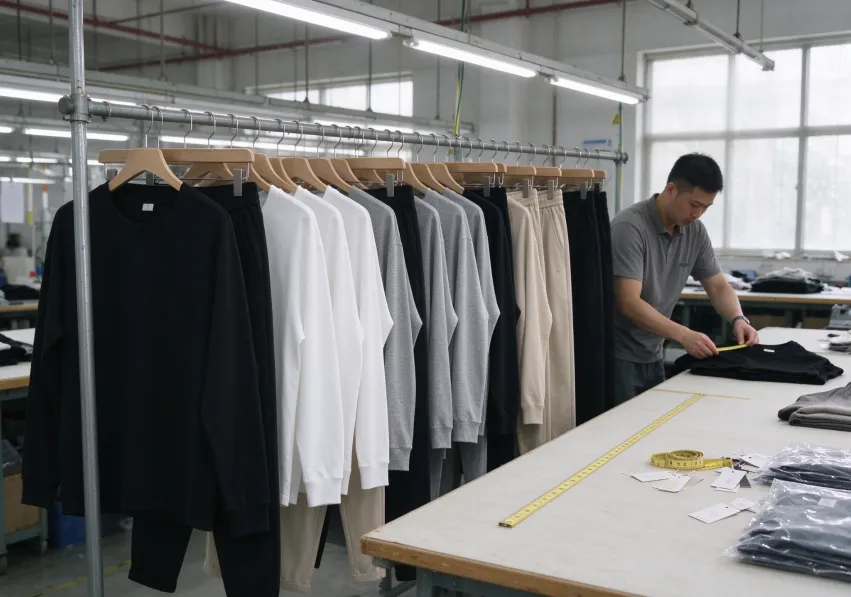


For new fashion founders, one of the biggest worries before starting production is custom clothing MOQ, or the minimum number of garments a factory requires to accept your order. MOQs can feel confusing because there is no universal number across all clothing suppliers. Some factories ask for 500 pieces per style, while specialty manufacturers focused on emerging brands can offer runs as low as 25 or 50 units. Understanding what shapes these limits helps you budget correctly, plan your collection and select a low MOQ clothing manufacturer for new brands that fits your launch goals. The minimum order quantity for custom apparel is never random; it is tied directly to material costs, machine setup time, labor and the factory’s business model.
The first thing to understand is the difference between stock fabric orders and fully custom development. If you choose fabrics that the mill already keeps in stock, especially core colors like black, white, navy and neutral tones, many suppliers can offer much lower MOQs. The factory avoids extra work for custom dye runs, which require large minimums to cover dyeing setup costs. On the other hand, if you want custom color dyeing, custom weave development or exclusive fabric blends, the MOQ will jump significantly. This is one of the major factors affecting garment manufacturing MOQ. For example, a custom dyed organic hemp denim may require a fabric MOQ of hundreds of yards, even if you only want a small run of finished garments.
Another key factor is product complexity. Simple styles like basic tees, hoodies and unisex tanks usually have lower MOQs. They use standard patterns, fewer trims and faster sewing processes. Complex styles, such as tailored jackets, multi-panel activewear, denim jeans with special hardware, or garments with custom embroidery and printing, normally come with higher minimums. Each extra custom feature adds setup work for pattern makers, printers, embroiderers and sewing teams. Factories need to cover that setup labor, so they set higher MOQs to make the project financially viable.
Factory type also changes what MOQ you can expect. Large mass-production factories are built for big retail brands and often start at 300–1000 pieces per style. Small-batch manufacturers and sample-focused studios are designed for startups, creators and small labels, and they specialize in low minimums. The trade-off is unit price: low MOQ orders usually cost more per piece. That is because the fixed setup cost for sampling, pattern making and fabric cutting is spread across fewer finished items. Many new brands accept this higher per-unit cost at launch, so they can test styles with their audience without investing thousands of dollars into a huge inventory risk.
Certifications are another important variable. If you require GOTS, OEKOTEX or other sustainable certification for your custom apparel, the pool of available suppliers becomes smaller. Certified fabric and certified dye houses often carry their own minimums. Even if a garment factory is flexible on finished-piece MOQ, the fabric mill may enforce a higher yardage minimum for certified stock. This is a common surprise for first-time brand owners focused on sustainable clothing.
So what number should you aim for? There is no perfect answer. If you are testing a new design, look for suppliers that offer 25–100 pieces per style. If you already have proven sales and customer demand, you can negotiate higher MOQs to bring down your cost per garment. Always confirm MOQ separately for fabric, colorway and finished style. Some factories list a per-style MOQ but still require a separate minimum for each color you pick.
When you talk to potential manufacturers, be clear about your stage as a brand. Many suppliers are willing to work with growing labels and adjust minimums when you plan repeat orders. Finding a low MOQ clothing manufacturer for new brands gives you space to test designs, gather customer feedback and scale slowly, instead of being stuck with large amounts of unsold inventory. By learning the factors affecting garment manufacturing MOQ, you can set realistic expectations and build a sustainable production plan for your clothing brand.