

For clothing brands launching custom collections, understanding custom apparel production lead time is essential to schedule marketing campaigns, pre-orders, and retail releases without unexpected delays. Many new founders mistakenly assume production starts immediately after sending a design sketch, but custom apparel is a multi-stage workflow that includes development, material preparation, sampling, bulk sewing and inspection. If you want to plan your launch timeline properly, you need to learn about clothing sample development lead time, what affects bulk garment production turnaround time, and practical tips on how to shorten clothing manufacturing lead times.
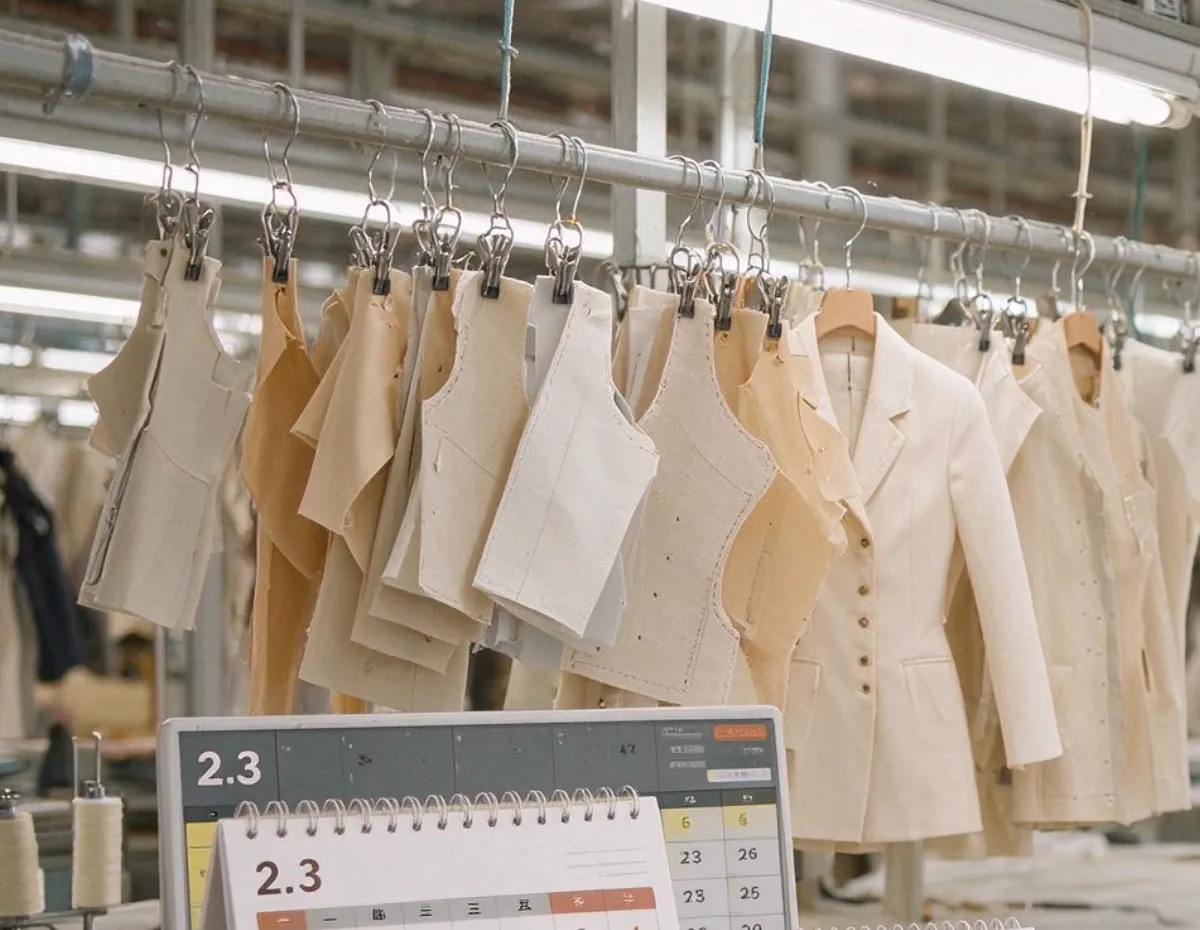
First, we need to split the whole cycle into two big parts: pre-production sampling and bulk manufacturing. The pre-production phase is where clothing sample development lead time sits. After you submit a finished tech pack, the factory will create patterns, source fabrics and trims, then make the first prototype sample. For simple styles like basic tees and leggings, the sample cycle usually takes 7–14 days. For complex woven garments, outerwear, or styles with custom embroidery, printing and special hardware, sampling can stretch to 2–3 weeks. Most brands will go through 2 or 3 rounds of revisions to adjust fit, fabric hand feel, or color matching, and each revision adds extra days. This is the most common reason projects fall behind schedule, so locking your specs and limiting sample revisions is the first rule of reliable lead time management.
Once samples are fully approved, the factory moves to material preparation, which is often the longest bottleneck for custom apparel production lead time. If you select standard stock fabrics and ready-made trims, material preparation can be wrapped up in 5–10 days. If you require custom dyed fabric, certified organic fabric, or exclusive woven labels and branded elastic, fabric mills and trim suppliers will need to produce these from scratch. Custom dyeing alone normally takes 20–35 days, especially when you need lab dip approval and color consistency across batches. This explains why many experienced brands reserve stock fabrics for fast-turnaround orders to avoid long waiting periods.
After all materials arrive and pass incoming inspection, bulk production begins, and this is the bulk garment production turnaround time most buyers care about. For basic knit styles with simple construction, bulk sewing, finishing and internal QC takes 20–30 days. For jackets, tailored pants, multi-layer activewear, or styles with lots of custom decoration, bulk production may take 30–45 days. The factory’s current order backlog also makes a huge difference. Peak seasons before holiday sales will push lead times longer, while off-season slots can deliver faster turnaround. The bulk stage includes cutting, sewing, washing, printing/embroidery, final inspection, folding, tagging and packing, not just sewing.
So what is the total benchmark for custom apparel production lead time? For simple private label styles with stock materials and minimal sample changes, the full timeline from tech pack approval to goods ready for shipment is usually 6–8 weeks. For fully custom styles with custom fabrics, custom trims and multiple sample revisions, the standard timeline is 10–16 weeks. It is important to separate “factory production days” from the full end-to-end timeline, as shipping and customs clearance will add extra weeks after goods leave the factory.
Now, let’s talk about how to shorten clothing manufacturing lead times without sacrificing quality. The most effective strategy is to finalize your tech pack completely before sending it to the factory. Missing measurements, unclear stitch notes, or vague trim references will trigger repeated confirmation and re-sampling, dragging out the whole project. Second, standardize your fabric and trim choices. Reusing existing stock fabrics and off-the-shelf accessories removes the long lead time of custom material manufacturing. Third, book production slots early, especially before peak seasons. Good factories fill up their production lines months in advance. Fourth, agree on inline QC instead of only final inspection. Catching defects early prevents full-batch rework, which can delay your order by weeks.
Even with the best planning, delays can still happen. Supply chain disruptions, fabric dyeing failures, and holiday shutdowns are common risks. Build buffer time into your launch schedule, ideally 1–2 extra weeks, so small delays do not ruin your release plan. You should also ask your supplier to send weekly progress updates once bulk starts, so you can spot risks early.
To conclude, custom apparel production lead time varies widely based on product complexity, fabric type, sample revision cycles and factory capacity. You need to separate the clothing sample development lead time from bulk garment production turnaround time when setting customer expectations. If you want to master how to shorten clothing manufacturing lead times, focus on solid tech packs, standardized materials, limited sample changes and proactive production tracking. A clear timeline helps you run smoother pre-sales, better inventory planning and more successful collection launches.