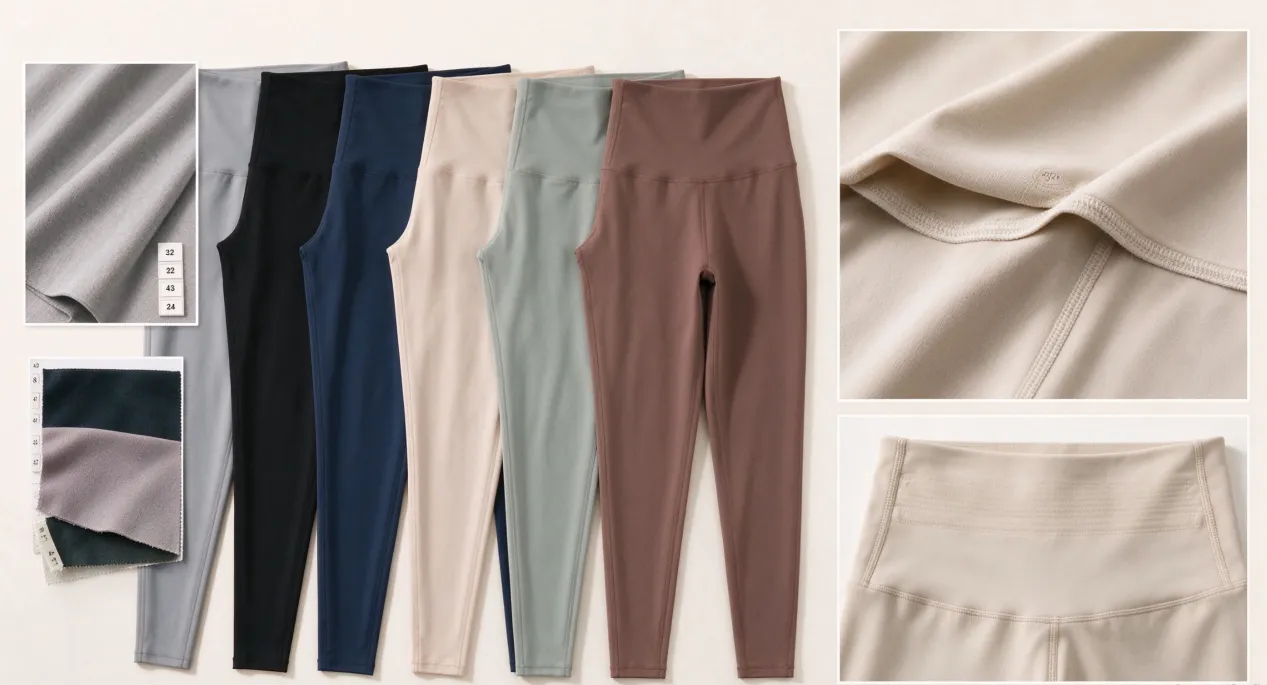


Leggings remain one of the highest-demand items in the global activewear market, but building a successful line takes careful planning, precise pattern work and reliable manufacturing support. Choosing the right custom leggings manufacturer is the most important decision for brand owners launching leggings, yoga pants and compression bottoms. Working with a specialist custom leggings manufacturer ensures you nail fit, compression, fabric quality and construction details, whether you are building a small private label test run or scaling a full wholesale collection. This guide walks through every stage of custom yoga leggings production, including core fabric and fit requirements for leggings manufacturing.
First, clarify your brand positioning and target audience before contacting a private label leggings manufacturer. Leggings cover many use cases: high-compression cross-training leggings, soft buttery yoga leggings, modest high-waisted everyday leggings, maternity leggings, plus-size active leggings and running leggings with hidden pockets. Each category has unique fabric and fit requirements for leggings manufacturing. A pair designed for hot yoga needs lightweight, breathable, quick-dry fabric; squat-proof training leggings require dense, opaque fabric with strong recovery; winter leggings may use brushed interior fabric for warmth. When you brief your custom leggings manufacturer, clearly state the intended activity, compression level, waistband style and key features such as side pockets, back drop-in pockets, seamless panels or contour booty stitching. Generic garment factories often overlook these details, while a dedicated private label leggings manufacturer has mature patterns and production workflows built specifically for bottom activewear.
Fabric selection is the backbone of custom yoga leggings production. The most popular leggings fabrics are nylon-spandex blends and polyester-spandex blends. Nylon-spandex delivers a soft, matte, buttery hand feel favoured by yoga brands, while polyester-spandex offers excellent moisture wicking and abrasion resistance for high-intensity training. The spandex ratio directly controls compression and stretch recovery, which is the top priority among all fabric and fit requirements for leggings manufacturing. Most leggings use 7%–13% spandex. Too little spandex and the garment will feel stiff and restrictive; too much spandex can cause over-stretching and sagging after use. Squat-proof opacity is another non-negotiable fabric requirement. Thin, low-density fabric will turn sheer when stretched, which leads to negative customer reviews. Your custom leggings manufacturer should perform squat tests on fabric swatches and fit samples before bulk production. Many brands also add upgrades: recycled yarns, anti-odour treatments, UV protection or matte finish to differentiate their line from generic wholesale leggings.
Fit development is where many new leggings brands run into trouble, and this is where a professional private label leggings manufacturer adds the most value. Standard fit variables include waistband height (low-rise, mid-rise, high-rise, super high-rise), waistband width, internal waistband grips, gusset design, rise length, inseam length and leg opening. A wide, double-layered high-rise waistband with internal silicone gripper is a common premium feature to prevent rolling down during workouts. The crotch gusset is a critical detail: diamond gussets eliminate camel toe and improve mobility, a must-have for custom yoga leggings production. Grading is equally important. A skilled custom leggings manufacturer will grade your base pattern across your full size range, from XS to 3XL or larger, so the compression and proportion stay consistent across every size, rather than simply scaling the pattern up and down. We recommend producing fit samples first, not just colour samples, and testing the sample on body models matching your target customer shapes to adjust tightness, rise and leg contour.
Next, finalise custom branding and finishing details with your custom leggings manufacturer for your private label line. Customisations include woven labels, printed size tags, heat transfer branding, custom colour matching, custom stitching colours, contour seam lines, pocket design and custom packaging. Many yoga brands choose seamless laser-cut leg openings for a clean, luxe look, while training leggings often use reinforced flatlock seams to reduce chafing. During custom yoga leggings production, confirm all decoration placement on your tech pack and sample. Some brands also create coordinating sets, pairing leggings with matching sports bras or workout tops, which means aligning fabric colour, compression and fabric hand feel across the whole set. This cross-item consistency is a challenge for inexperienced factories, but a specialist private label leggings manufacturer can coordinate matching dye lots for your full collection.
Sample approval and pre-production checks are essential before bulk manufacturing. The typical workflow is: fabric swatch approval → fit sample → revised sample → pre-production sample for sign-off. At this stage, you must verify all the fabric and fit requirements for leggings manufacturing: opacity, stretch recovery, waistband stay-put performance, seam strength, colour fastness and wash performance. Do not rush sample revisions. Fixing fit issues at the sampling stage is low-cost; fixing fit problems mid-bulk production creates massive delays and waste. A reliable custom leggings manufacturer will provide clear feedback on your pattern or tech pack, flagging potential production issues early, such as fabric limitations for your chosen pocket style or contour stitching.
Once samples are approved, confirm order terms, MOQ, lead time and quality control arrangements with your private label leggings manufacturer. Small-batch private label leggings are a great way to test market demand before committing to large orders. Our factory supports flexible MOQs for custom yoga leggings production, suitable for new direct-to-consumer brands and established labels launching seasonal drops. During bulk production, we conduct in-line inspections, checking fabric shade consistency, stitching quality, waistband construction and sizing accuracy. Final inspection covers measurement checks, print/label placement and packaging.
Launching a standout leggings collection is more than printing a logo on blank bottoms. It starts with defining your product concept, selecting the right performance fabric, perfecting the pattern and fit, and partnering with a trusted custom leggings manufacturer. By prioritising the key fabric and fit requirements for leggings manufacturing, and working closely with your private label leggings manufacturer through sampling and revisions, you can create durable, comfortable leggings that stand out in the crowded Sports Wear and Activewear market and build loyal repeat customers for your fitness brand.